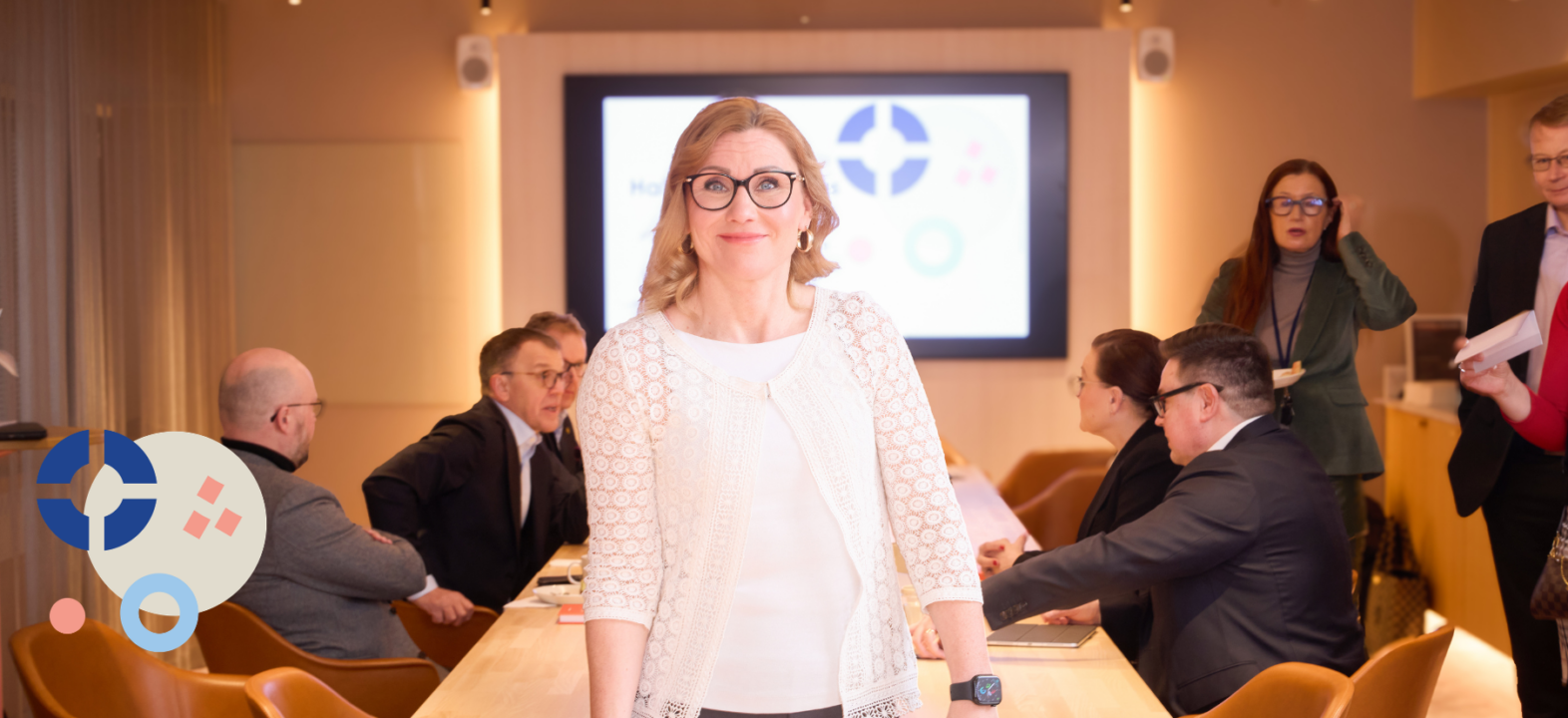
Hanna Korvenpää Steers the Helsinki Region Chamber of Commerce Towards a Stronger International Focus
What kind of year do you expect as Chair of the Helsinki Region Chamber of Commerce?
“I am expecting a year in which the Helsinki region takes bold steps towards growth. Companies are currently calling for clarity, well-functioning connections and predictability — and in all of these, the Chamber of Commerce has an important role to play. The year 2026 offers an opportunity to accelerate the green transition, streamline the transport system and strengthen the Helsinki region’s position as an international business environment. Above all, it is about making companies’ everyday operations easier through concrete improvements.”
You are an experienced leader in the logistics sector. What are the biggest logistical challenges in the Helsinki region?
“The most significant challenges relate to predictability and infrastructure bottlenecks. The functionality of the main road network and congestion on key freight routes affect transport chains throughout Finland.”
Which of these challenges could be addressed the fastest?
“The quickest solutions lie in smoother decision-making and permitting processes. Many issues do not require billion-euro investments, but rather swift implementation and solution-oriented thinking.”
Logistics is a highly international industry. How does that show in your day-to-day work as Managing Director of Kuehne+Nagel Finland and Estonia?
“Internationality is present in our daily work — in our customers, market signals and changes in supply chains. Our operations in Finland and Estonia form part of a global network, which requires us to respond quickly to change and make decisions that take the entire supply chain into account. We see, for example, how geopolitical developments reshape routes, capacity and customer needs. At the same time, internationality is a competitive advantage, as it allows us to leverage global innovations, technologies and best practices.”
How does Finland’s economic situation manifest itself in the logistics sector?
“Economic developments in Finland are reflected very quickly in logistics. Demand in logistics follows economic cycles and in some cases even anticipates them.”
Kuehne+Nagel is a Swiss company. What could Finns learn from the Swiss?
“The Swiss excel in long-term thinking and precision. They make decisions that extend beyond electoral cycles and invest systematically in infrastructure and expertise. In addition, Swiss customer focus and quality thinking are deeply embedded in Kuehne+Nagel’s culture. Competitiveness is built through small, everyday actions and by consistently delivering on promises.”
They make decisions that extend beyond electoral cycles and invest systematically in infrastructure and expertise.
What have recent crises revealed about the weaknesses and strengths of Finland’s supply chains?
“The crises of recent years have highlighted how sensitive supply chains are to global change. Predictability suffers as routes shift rapidly, capacity disappears unexpectedly and decisions must be made without normal levels of visibility. At the same time, clear strengths have emerged, particularly the ability of Finnish companies to react quickly and in a structured manner.”
How does the current geopolitical situation affect logistics and transport?
“It affects route choices, costs and delivery reliability. When there are changes in routes or capacity, logistics companies must respond within days rather than months. Customers’ demand for alternative transport solutions and improved risk management has increased significantly.”
What single decision in Finland — and especially in the Helsinki region — would improve logistics competitiveness faster than anything else?
“Ensuring smooth traffic flow on main roads. Competitive logistics is only possible with a well-functioning transport infrastructure.”
What internationalisation trends are currently visible among Finnish companies?
“Companies are actively seeking new markets but are doing so more cautiously than before. New EU trade agreements are also creating fresh opportunities.”
Your most important lesson from international business?
“Trust is the hardest currency there is. Markets change, but long-term partnerships and open dialogue help organisations withstand crises. While speed is essential, so is long-term thinking. Above all, the customer must never be forgotten, as their success is our success.”
Your message to companies in the Helsinki region?
“The Helsinki region has enormous potential. We have expertise, growth opportunities and a strong international location. I encourage every company to look boldly outwards, towards markets, partnerships and investments. The Chamber of Commerce exists to support and advocate for you, ensuring that companies have the best possible conditions to succeed and grow.”
This article was first published in the Helsinki Region Chamber of Commerce’s Yearbook 2026