Integrating Product Development into Commercial Operations
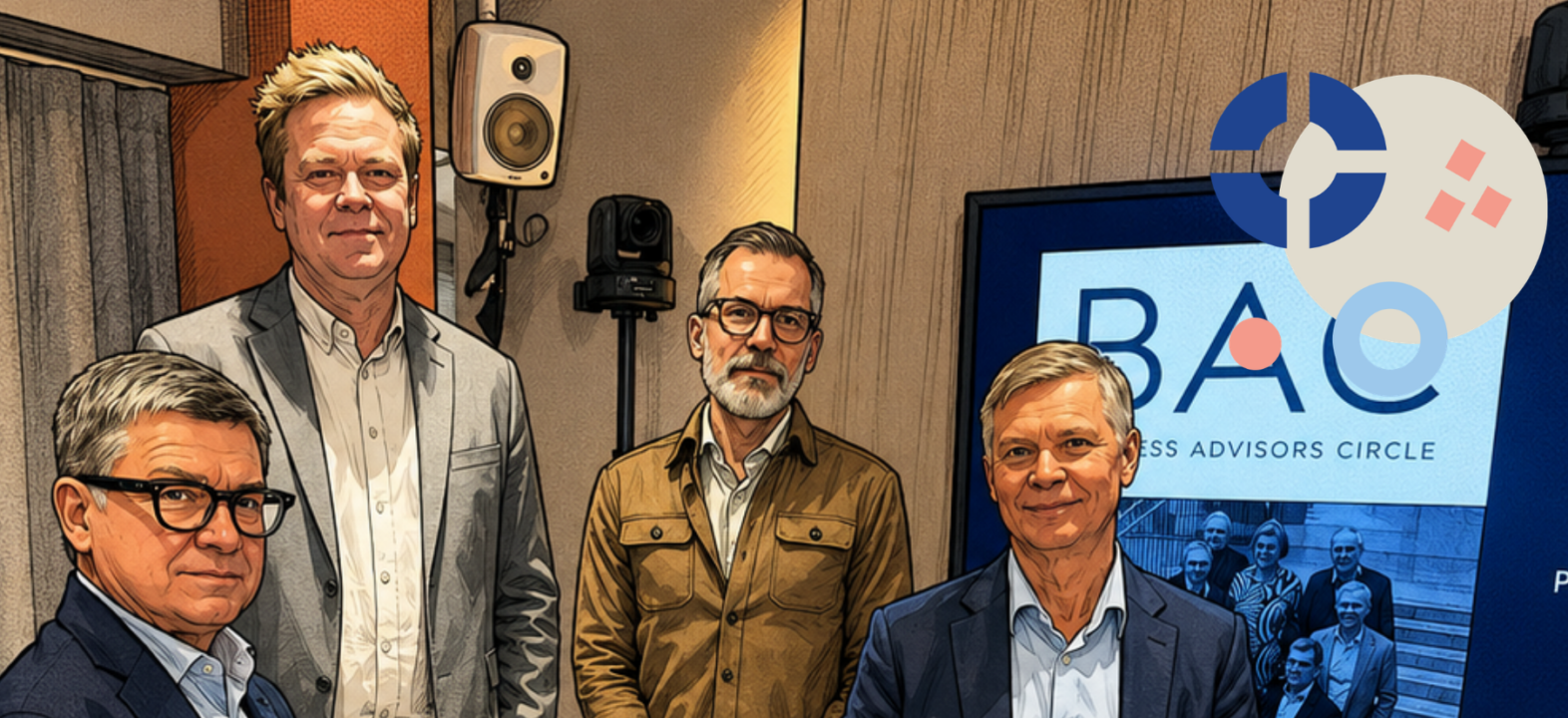
Finland has a large number of business leaders and experts who have accumulated decades of knowledge through successes, failures and various periods of change. Business Advisor Circle aims to bring experienced business leaders together with business owners, boards and management teams as sounding boards, particularly in situations where there is no single clear right answer.
According to Vesa Tuomi, founder of Business Advisor Circle, companies make surprisingly little use of the expertise of experienced business leaders. Tuomi has extensive experience in technology-sector sales, as a partner at EY and as a member of corporate boards. He also serves on the Board of Technology Industries of Finland.
Finland has a wealth of high-quality technical, production and engineering expertise, as well as innovations that have not sufficiently translated into growing and profitable businesses. A better balance is needed between technical, production and commercial capabilities.
Three Insights on Growth and Strategy
Three key insights emerged from the committee’s discussion that may also benefit other companies seeking growth.
1. At Its Best, a Commercial Perspective Guides Product Development
According to Tuomi, one of the key challenges facing Finnish businesses is that technical innovations have not sufficiently translated into profitable revenue growth. Developing technology must go hand in hand with identifying customer problems, selling solutions and building scalable businesses. At its best, a commercial perspective guides decisions about where and how technical expertise and product development are applied.
The key question for the growth of Finnish companies is therefore: how can we achieve a better balance between our technical, production and commercial capabilities?
2. Experience Is an Underutilised Asset in Finland
When discussing business transformation, attention often turns to new skills and technologies. Meanwhile, decades of accumulated experience may go untapped.
Tuomi pointed out that Finland has many experienced business leaders, board professionals and experts in their 50s, 60s and 70s who have witnessed several technological disruptions, economic cycles and periods of corporate change. Their expertise could represent a significant resource for businesses.
The value of experience becomes particularly evident in situations where no ready-made solution exists. An approach that worked for one company may not be directly applicable to another, but someone who has faced similar challenges before can help ask new questions, identify alternatives and recognise risks.
Artificial intelligence makes this question even more interesting. AI can already provide vast amounts of information and a range of options in a matter of moments. Alongside this, it is worth considering the importance of sharing experience and tacit knowledge between people.
The committee’s discussion suggested that these should not be viewed as alternatives to one another. AI can bring information to the table, while advice grounded in experience can help determine which information is relevant to the situation at hand.
3. Strategy Matters Most When the Right Answer Is Unknown
Some changes in the business environment are planned and gradual, while others emerge rapidly from external factors. Technology, artificial intelligence, regulation, changes in personnel or entirely unexpected events may force companies to reassess their direction.
Strategic planning is therefore not simply about creating a plan and implementing it. What matters is the ability to consider different possible futures: what might happen, and what would we do in response?
Tuomi emphasised the importance of scenario thinking in situations where management or the board cannot know with certainty which course of action is right. These are precisely the moments when it is valuable to challenge existing assumptions and ensure that a sufficiently broad range of alternatives has been considered.
However, business leaders do not always have a natural forum for such discussions. An independent, experienced external sounding board can be particularly valuable when leaders want to test their thinking before making decisions.
This article was compiled using AI based on the discussion. The content was subsequently edited and reviewed by a human. The article was first published in Finnish and translated to English by Artificial Intelligence
Innovation & Growth Committee Members Contributing to Notes on Growth
Chair:
Jukka Virkkunen, Partner, Digital Workforce Services Oy
Vice-Chair:
Roger Björkbacka, Senior Public Policy Manager, Bolt Services FI Oy
Other Members:
Henrik Balk, VP Digital Transformation & Architecture, Finnair Oyj
Gustaf Forsberg, Development Manager, Finnet-liitto ry
Miika Halonen, CEO, Oima Oy
Jussi Hermunen, Managing Director, Digitalist Experience Oy
Emma Hyökyvaara, Head of Board, The Orange Company Oy
Kai Kaasalainen, CEO, Tamro Oyj
Heidi Kananen, CEO, Valve Branding Oy
Ira Keskitalo, CEO, Sulava Oy
Aino Mensonen, Head of Service Design, Ramboll Finland Oy
Niklas Mannfolk, VP of Business Environment Development, Huawei Technologies Oy
Oskari Ojala, Senior Software Architect, Nitor Group Oy
Sarita Runeberg, CEO, Startup Maria Oy
Ville Simola, CEO, Digital Commerce Finland
Jori Sistonen, CEO, Onitio Finland
Sami Sulkko, VP Public Affairs, CGI Suomi Oy
Anna-Mari Ylihurula, Director, Enterprise Business, DNA Oyj
Expert Member:
Salla Huttunen, Vice President, Haaga-Helia University of Applied Sciences
Committee Secretary:
Reino Meriläinen, Director, Helsinki Region Chamber of Commerce
The Innovation & Growth Committee operates in English and is generally referred to by its English name.